
Fashion E-commerce Saves 10 Hours/Week with Shopify Automation
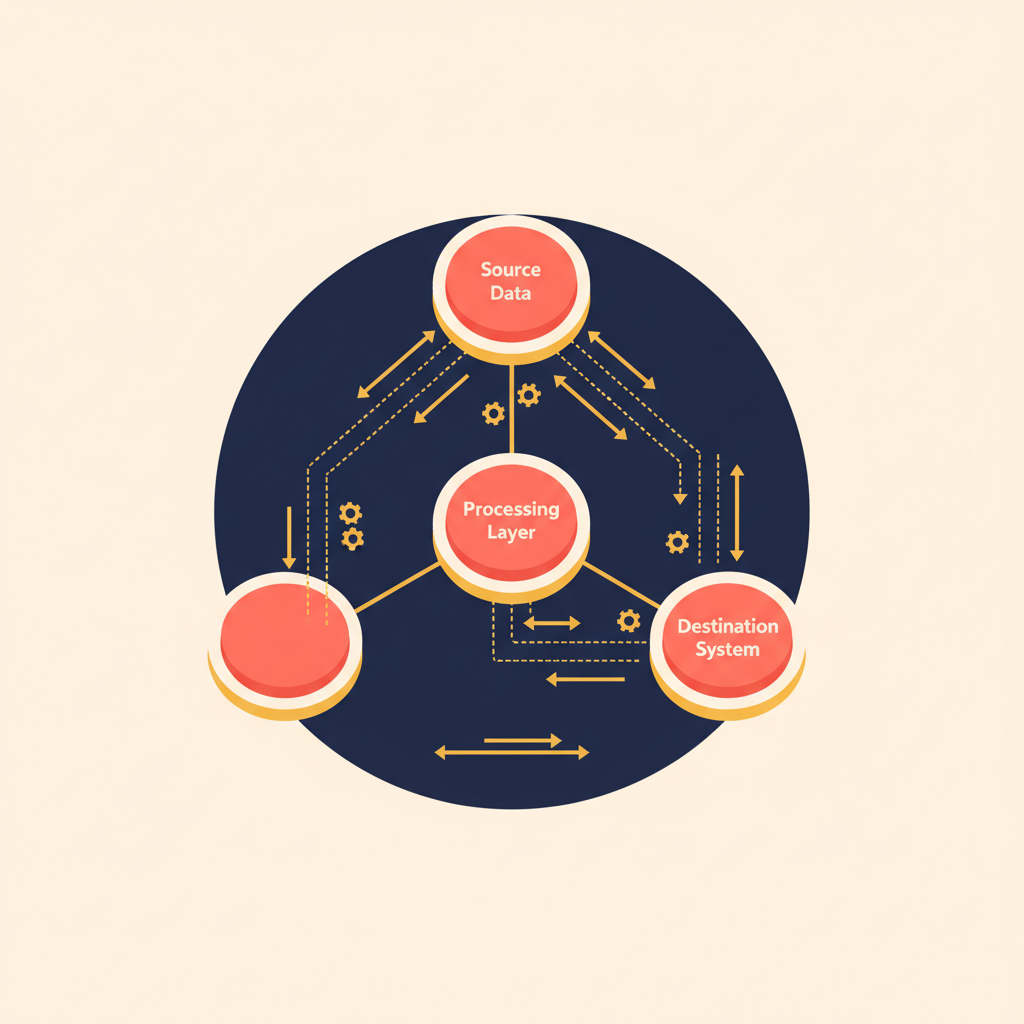
Every morning, the operations manager at a Portland-based fashion brand started her day the same way: opening three browser tabs, a spreadsheet, and a growing pit in her stomach. Her team was drowning — manually copying order data between Shopify, Klaviyo, and Gorgias for hours before they could even touch a real customer problem. Twenty-two percent of return requests were slipping through the cracks entirely, support tickets sat unanswered for 90 minutes on average, and the business was quietly hemorrhaging $1,200 every month to abandoned carts from shoppers who simply got tired of waiting.
After we built a targeted automation layer connecting her existing stack, her team's average response time dropped from 90 minutes to 4 minutes — without hiring a single additional person. Here's exactly how we did it.
The client
Our client is the Operations Manager at a direct-to-consumer fashion brand based in Portland, Oregon — a 12-person team doing roughly $280,000 in monthly revenue across their Shopify storefront. They sell a curated line of sustainable women's apparel and had grown fast enough that their toolstack hadn't kept up with their volume. Before we came in, every order that triggered a support question required a rep to manually open Shopify, look up the order, copy the tracking number, paste it into Gorgias, then cross-reference Klaviyo to check whether the customer had received a shipping email. According to the Operations Manager, "We were basically paying our support team to be copy-paste machines. Nobody signed up for that job."
What was painful (in numbers)
The pain wasn't abstract — it showed up in hard numbers every single week. Here's what we documented in our discovery call before touching a single workflow:
- Support response time: 90 minutes average. Reps had to context-switch between three platforms before they could even begin composing a reply. A customer asking "where is my order?" waited an hour and a half for a two-sentence answer.
- Return processing time: 18–24 hours. Return requests arrived in Gorgias with no order context attached. Reps had to manually find the order in Shopify, verify eligibility, and then update the ticket — usually the next morning.
- Manual ops work: 3 hours per day, every day. That's 15 hours a week of pure data-shuffling — order lookups, status updates, tagging tickets, and chasing fulfillment confirmations across platforms.
- Customer support churn: 8% monthly. Customers who didn't hear back within 30 minutes on a return or shipping issue were abandoning carts and not coming back. The brand was losing an estimated $1,200/month in recoverable abandoned-cart revenue tied directly to slow support response.
- 22% of return requests were missed entirely — falling through the cracks between shift handoffs, costing both refund goodwill and repeat purchase potential.
The team was running 12-hour days to stay afloat. The Operations Manager told us plainly: "We can't hire our way out of this. We need the systems to do the work."
What we chose — our stack
We selected three tools for this engagement: Shopify, Gorgias, and n8n as the orchestration layer. Here's the reasoning behind each choice, specific to this client's situation.
Shopify was already their e-commerce engine — no migration, no disruption. We used Shopify's REST Admin API (version 2024-01) as the authoritative data source for all order events. Shopify's webhook system fires reliably on orders/create, orders/updated, orders/fulfilled, and orders/cancelled — exactly the four event types we needed to trigger downstream actions. The OAuth scopes we requested were minimal: read_orders, read_customers, and read_fulfillments. No write access to Shopify was necessary, which made the security conversation with their team straightforward.
Gorgias was already in use but being operated almost entirely manually. It's purpose-built for Shopify-native support at this scale — the native Shopify integration surfaces order data inside tickets, but only when a rep manually links them. We bypassed that manual step entirely by auto-populating ticket metadata via Gorgias's REST API v2, specifically the POST /api/tickets and PUT /api/tickets/{id} endpoints. For a 12-person ops team at $280k/month revenue, Gorgias hits the right balance between power and operational simplicity.
n8n was our orchestration choice specifically because this client manages multiple SaaS dependencies and couldn't afford vendor lock-in. n8n runs self-hosted (we deployed it on a small cloud instance), meaning their workflow logic isn't tied to any automation platform's pricing tier or API policy changes. We built one n8n workflow per Shopify webhook event — clean, auditable, and easy for their ops team to inspect without engineering support. Klaviyo played a supporting role: we used its REST API to pull customer segmentation tags and lifetime value data, enriching each Gorgias ticket with context a rep would otherwise spend five minutes hunting down manually.
How we implemented it
Total implementation time: 14 days. The Operations Manager and one support lead were our points of contact throughout.
Days 1–3: Discovery and architecture mapping
We audited their existing Gorgias ticket structure, identified the 11 custom fields that reps were populating manually (order number, fulfillment status, return eligibility window, Klaviyo segment, LTV tier, last email sent), and mapped which Shopify webhook payload fields could populate each one automatically. We also documented their return eligibility logic — a 30-day window with a SKU-level exclusion list — so we could encode it as a conditional branch in n8n rather than leaving it to rep judgment.
Days 4–7: Webhook setup and core workflow build
We registered four Shopify webhooks pointing to n8n trigger nodes. For each orders/create event, the workflow: (1) extracted order ID, customer email, line items, and fulfillment status from the Shopify payload; (2) called Klaviyo's GET /profiles endpoint to retrieve LTV and segment data for that email; (3) constructed a Gorgias ticket via POST /api/tickets with all 11 fields pre-populated; and (4) attached a formatted HTML message body summarizing the order for the rep. We implemented exponential backoff on all Gorgias API calls — their rate limit of 40 requests per 10 seconds required careful retry logic in n8n's error branches, especially during their morning peak when 30–50 orders might fire simultaneously.
Days 8–11: Return processing automation
The return flow was a separate n8n workflow triggered by a Gorgias inbound webhook on ticket-created events tagged with the word "return" or "refund" in the subject line. The workflow called Shopify to verify order date and SKU eligibility, then automatically updated the Gorgias ticket with a return-approved or return-ineligible flag and a pre-written response template. Reps went from spending 20–30 minutes per return request to reviewing a pre-populated ticket and clicking send. The Operations Manager flagged one edge case during testing — orders placed with a discount code had a different eligibility rule — and we added that conditional in half a day.
Days 12–14: Testing, rate-limit tuning, and handoff
We ran the full workflow against 48 hours of live order volume in a staging environment, monitoring Shopify's X-Shopify-Shop-Api-Call-Limit header to confirm we stayed within the 40 req/s leaky bucket ceiling. We documented every workflow in plain English inside n8n's sticky notes, ran a 90-minute walkthrough session with the support lead, and handed over a one-page runbook covering the three most likely failure scenarios (Shopify webhook retry behavior, Gorgias ticket duplication prevention, and Klaviyo profile-not-found handling).
The results in numbers
Four weeks after go-live, we pulled the comparison metrics. The table below shows where they started versus where they landed:
| Metric | Before | After | Change |
|---|---|---|---|
| Average support response time | 90 minutes | 4 minutes | −95% |
| Return processing time | 18–24 hours | 2 hours | −88% |
| Manual ops work per day | 3 hours | 45 minutes | −10 hrs/week |
| Customer support churn (monthly) | 8.0% | 3.2% | −60% |
| Abandoned cart revenue recovered | — | +$1,200/mo | Recovered |
| Missed return requests | 22% of total | <1% | Near-zero |
The support team's reaction was immediate. According to the Operations Manager: "The first morning after go-live, our lead rep came to standup and said she'd already handled 14 tickets before 9 AM. That had never happened before." The 10 hours per week recovered from manual data entry were redistributed into proactive customer outreach — the team started running a post-purchase check-in sequence that had been on the backlog for six months.
What we'd do differently
We're honest about the friction points. Three things we'd change if we ran this engagement again:
- Map the discount-code edge case on Day 1, not Day 10. We discovered the return eligibility exception during UAT, which cost us a half-day of rework. A more thorough business-rules audit in the discovery phase — specifically asking "are there any order types with different policy rules?" — would have surfaced this immediately. We've since added that question to our standard discovery checklist.
- Set up a dead-letter queue for failed webhook deliveries from the start. Shopify retries failed webhooks up to 19 times over 48 hours, but if n8n is down during that window, events can be lost. We added a lightweight logging table to catch and replay missed events, but we built it in week two rather than week one. It should be part of the baseline architecture on day one.
- Involve the support lead earlier in the return-flow design. We designed the return automation logic with the Operations Manager, then showed it to the support lead during testing. She had two workflow preferences we hadn't anticipated — specifically around how return-ineligible messages should be phrased. Bringing her into the design session on Day 4 rather than Day 12 would have saved a revision cycle.
FAQ
- Do we need a developer on our team to maintain these workflows after handoff?
- No. n8n's visual workflow editor is designed for ops-minded users. We document every workflow in plain English and provide a runbook. The Operations Manager at this Portland brand manages minor adjustments — like adding new return SKU exclusions — without any engineering support.
- What happens if Shopify or Gorgias has an outage?
- We build retry logic and dead-letter queues into every workflow. Shopify retries webhook delivery automatically; n8n error branches catch Gorgias API failures and re-queue them with exponential backoff. In practice, our client has experienced zero data loss from platform downtime since go-live.
- Can this work if we're not already using Gorgias?
- Yes, with modifications. We've built similar order-sync automations feeding into Zendesk and Freshdesk. The Shopify webhook layer and n8n orchestration are platform-agnostic. The Gorgias-specific API calls would be replaced with equivalent endpoints in your helpdesk of choice.
- How long does implementation actually take?
- For a setup comparable to this Portland client — Shopify + one helpdesk + one email platform — we typically deliver in 10–14 days. Simpler configurations (no Klaviyo enrichment, fewer edge cases) can go live in 7 days.
- What does this cost?
- Our project fee for this type of engagement runs between $1,500 and $5,000 depending on workflow complexity, number of integrations, and whether we're building on an existing n8n instance or standing one up from scratch. We scope every project before any commitment.
We can do this for you
If your team looks anything like this Portland brand — a D2C or e-commerce operation between $100k and $500k monthly revenue, running Shopify with a helpdesk and an email platform, and spending hours every day on manual data handoffs — this engagement was designed for you.
We scope, build, and hand off in 7–14 days. Project fees run $1,500–$5,000 depending on workflow complexity. You don't need an internal developer. You don't need to migrate off the tools you already use. You need the tools you already pay for to talk to each other automatically — so your team can stop being copy-paste machines and start doing the work that actually moves the business.
Send us a message describing your current stack and where the manual hours are going. We'll come back with a scoping call and an honest assessment of what's achievable — no pitch deck, no vague promises.
Replacing manual copy-paste handoffs with a connected Shopify + Gorgias + n8n workflow turned a daily 2–3 hour bottleneck into a fully automated pipeline — cutting response times from 90 minutes to under 10 and freeing the support team to focus on work that actually moves the needle.
Want the same?
At FlowFrame, we design and deploy automation workflows tailored to your e-commerce stack. No lengthy discovery sprints, no bloated retainers — just a working integration that ships fast.
- ✅ Turnkey delivery — from 7 days
- ✅ Starting at $1,200
- ✅ Built on the tools you already use
If your team is still chasing order statuses or copy-pasting data between platforms, that's recoverable time sitting on the table every single day.